
Spring football has become one of the most important evaluation periods in modern college football. For programs competing in the Southeastern Conference, spring practices are not only about installing plays and developing young players. They are about identifying the athletes who can handle the physical demands, depth requirements, and pressure that define championship-level football.
For the Texas Longhorns, spring football in 2026 represents another major step under head coach Steve Sarkisian. After transforming Texas into a national contender, winning the 2023 Big 12 Championship, reaching the College Football Playoff, and entering the SEC era, the program is now focused on building the roster necessary to compete for conference championships.
The 2026 season brings increased expectations. Texas is no longer adjusting to the SEC environment. The Longhorns are expected to compete against programs such as Georgia, Alabama, LSU, Oklahoma, and Tennessee for conference supremacy.
Several position battles during spring practices could determine whether Texas has the depth and consistency required to make a championship run.
Texas Enters Spring Football With Championship Expectations
The Texas Longhorns enter the 2026 offseason as one of the most talented programs in college football. Steve Sarkisian has built a roster capable of competing nationally through elite recruiting, transfer portal additions, and player development.
The foundation of the program remains centered around offensive efficiency, quarterback development, and physical defensive play.
The Texas Longhorns football roster reflects the depth required to compete in the SEC, where teams must survive long schedules against nationally ranked opponents.
The biggest challenge for Texas is maintaining consistency across every position group.
A championship contender cannot rely only on star players. SEC success requires quality depth, especially at positions affected by injuries and physical matchups.
| Position Group | Spring Focus |
|---|---|
| Quarterback | Leadership development and offensive command |
| Offensive Line | Protecting the quarterback and creating consistency |
| Wide Receiver | Replacing production and building chemistry |
| Defensive Line | Creating pressure against SEC offenses |
| Secondary | Improving coverage against elite passing attacks |
Spring practices provide the first opportunity to evaluate which players can become major contributors during the 2026 season.
Quarterback Development Around Arch Manning
The biggest storyline surrounding Texas football remains Arch Manning.
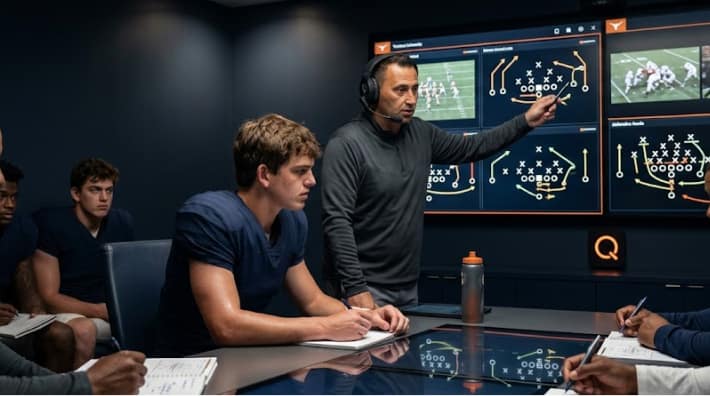
After arriving in Austin as one of the most highly recruited quarterbacks in recent college football history, Manning enters the next stage of his development as the potential centerpiece of the Longhorns’ championship ambitions.
Steve Sarkisian’s reputation as an offensive developer has been one of the reasons Texas attracted elite quarterback talent. His previous work with quarterbacks such as Tua Tagovailoa at Alabama and other NFL-level passers has strengthened the program’s offensive identity.
The Texas football offense will continue to revolve around quarterback decision-making, accuracy, and leadership.
Manning’s spring focus will involve more than physical ability. The key areas include:
- Understanding defensive adjustments
- Improving communication with receivers
- Managing SEC-level pressure situations
- Taking leadership of the locker room
The SEC features some of the best defensive coordinators in college football. Quarterbacks must quickly process complex defensive schemes and make decisions under pressure.
For Texas, Manning’s development could determine the difference between competing for an SEC Championship and simply having a successful season.
Offensive Line Competition Will Define Texas’ Physical Identity
The offensive line represents one of the most important position battles heading into spring football.
The SEC is built around physical football, and championship teams must control the line of scrimmage. Protecting Arch Manning while creating consistent rushing opportunities will be critical.
Texas has invested heavily in offensive line recruiting under Sarkisian, understanding that elite quarterbacks require reliable protection.
The Longhorns must evaluate:
- Starting combinations
- Interior line consistency
- Pass protection against elite rushers
- Run blocking efficiency
The offensive line battle also impacts Texas’ ability to control games late.
SEC championships are often decided by teams that can run the football, protect leads, and win physical battles in the fourth quarter.
Texas’ offensive identity under Sarkisian has traditionally emphasized balance. Maintaining that approach will require strong offensive line performance.
Wide Receiver Development After Major Production Changes
Texas has become known for producing explosive offensive talent, and the wide receiver position remains a critical part of the program’s identity.
The 2026 spring period provides an opportunity for younger receivers to establish themselves as reliable targets for Manning.
The challenge is creating chemistry between the quarterback and receivers before the season begins.
Important evaluation areas include:
- Route precision
- Blocking ability
- Consistency against physical coverage
- Big-play potential
The SEC presents different challenges for receivers because defensive backs are often faster, more physical, and more experienced.
Texas must identify players capable of creating separation against some of the best secondary units in college football.
Defensive Line Development Becomes A Championship Priority
The defensive line could be one of the most important position groups for Texas during the 2026 season.
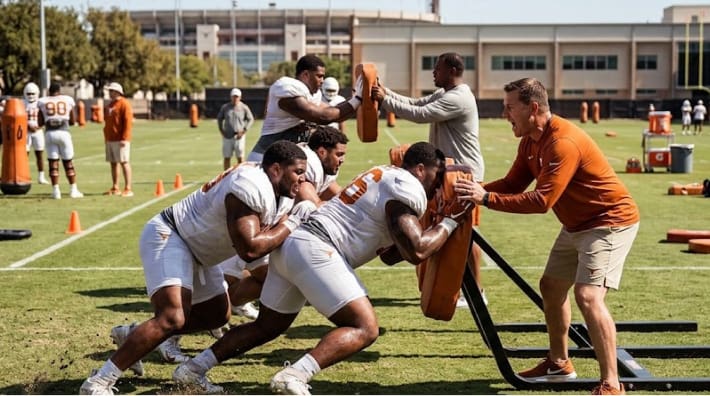
SEC football is frequently determined in the trenches. Teams that consistently pressure quarterbacks and stop the run usually remain competitive throughout the season.
Texas defensive coordinator challenges involve preparing for offenses from programs with elite offensive lines and talented running backs.
The Longhorns must develop players who can:
- Generate consistent pass rush
- Control rushing lanes
- Create negative plays
- Maintain pressure throughout games
The SEC football rankings and schedule demonstrate the level of competition Texas faces every season. Defensive line depth will be essential because SEC opponents often create physically demanding matchups week after week.
Secondary Battles Will Determine Defensive Consistency
The modern SEC requires defensive backs who can handle elite passing attacks.
Programs such as Georgia, Alabama, and LSU consistently produce NFL-caliber receivers and quarterbacks, making secondary performance a major factor in conference success.
Texas enters spring evaluating cornerback development, safety communication, and overall defensive consistency.
The secondary must improve in several areas:
- Eliminating explosive plays
- Creating turnovers
- Communicating against motion-heavy offenses
- Defending elite receivers
A championship-level defense requires more than individual talent. Players must operate together with discipline and confidence.
Spring practices provide the foundation for developing that chemistry.
Recruiting And Young Players Could Change The Depth Chart
One advantage Texas has built under Steve Sarkisian is recruiting momentum.
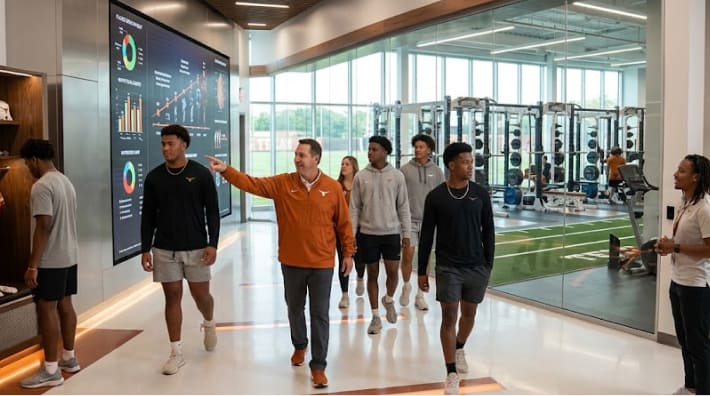
The Longhorns continue competing for elite prospects across the country while maintaining a strong presence in Texas high school football.
Young players entering the program have opportunities to earn playing time early, especially at positions where depth remains competitive.
The SEC environment rewards teams that can develop multiple contributors at each position.
A freshman or sophomore making an unexpected impact can change the entire outlook of a season.
Texas’ ability to identify and develop young talent will remain one of the biggest factors in long-term championship competition.
Spring Football Will Define Texas’ SEC Championship Identity
The 2026 spring period represents more than preparation. It is a chance for Texas to establish the identity required to compete at the highest level of college football.
The Longhorns have already proven they can reach championship conversations. The next challenge is building the consistency required to win inside the SEC.
The most important questions entering the offseason are clear:
Can Arch Manning become the leader of a championship offense?
Can Texas build enough physical depth to compete against SEC opponents?
Can young players emerge as difference-makers?
Steve Sarkisian has positioned Texas among college football’s elite programs. Spring football will determine which players are ready to help complete the next step.
The 2026 season will ultimately be decided on Saturdays, but the foundation will be built during practices, position battles, and the daily competition that defines championship programs.